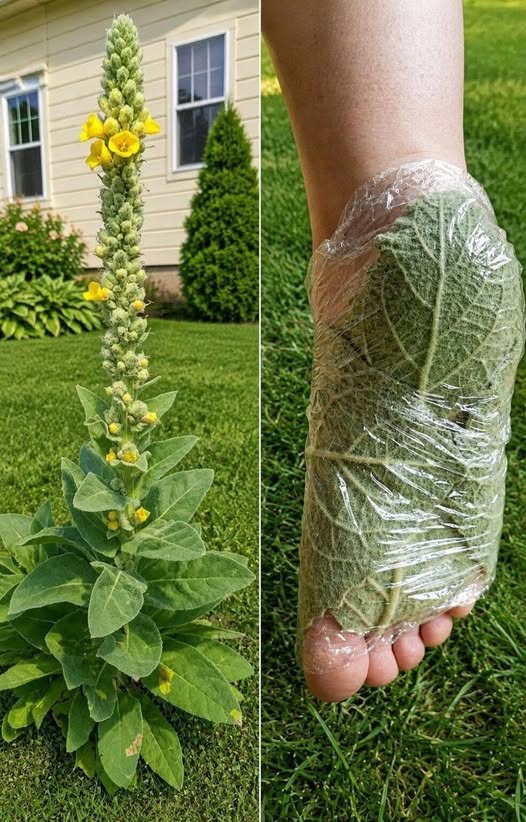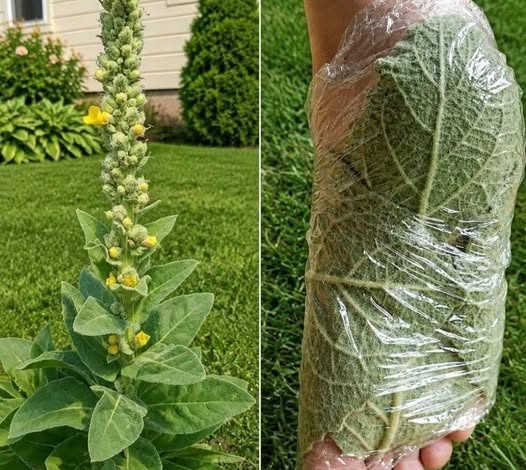
Mullein (Verbascum thapsus) is a tall, soft-leaved wild plant often mistaken for a common roadside weed. Recognizable by its fuzzy gray-green leaves and bright yellow flower spikes, it has been part of traditional herbal practices for centuries.
Growing in fields, roadsides, and disturbed soil, mullein thrives where many plants struggle. During its first year, it forms a low rosette of velvety leaves. In its second year, it sends up a tall flowering stalk that can reach several feet in height.
Historically, mullein has been used in herbal teas, infused oils, and folk remedies, particularly for respiratory comfort and external applications. However, traditional use does not equal proven medical effectiveness, and modern scientific evidence remains limited for many of these claims.
Recently, social media has revived interest in mullein through viral wellness trends, including claims that wrapping its leaves around the feet can “pull toxins” from the body. Experts note there is no reliable scientific evidence supporting such detoxification claims.
Plant enthusiasts value mullein for its unique appearance, pollinator-friendly flowers, and connection to herbal history. Those interested in harvesting wild mullein should ensure proper identification and avoid plants growing in contaminated areas.
Mullein remains a fascinating example of how a plant can be viewed as both a weed and a treasured part of traditional botanical knowledge.