
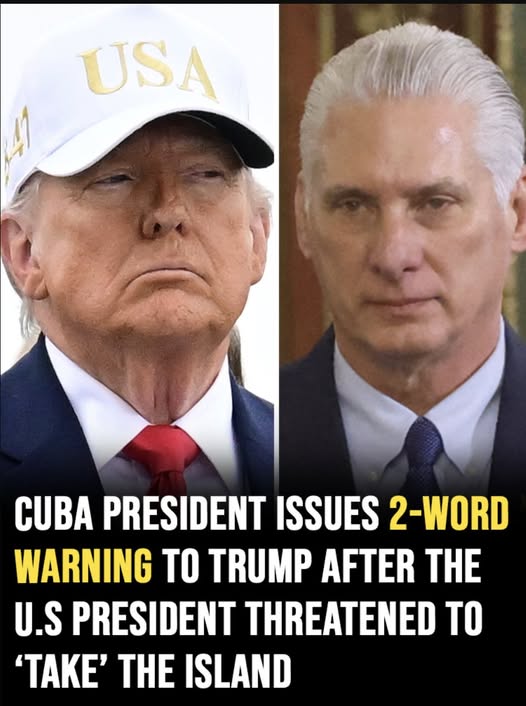
Heightened U.S.–Cuba Rhetoric Draws International Attention
Recent statements from leaders in the United States and Cuba have intensified scrutiny of the already fragile relationship between the two nations. Comments suggesting possible future actions have prompted strong reactions and fueled public debate over what could come next.
Cuban Leadership Pushes Back
Miguel Díaz-Canel responded firmly following remarks attributed to Donald Trump that indicated potential action involving the island nation. In a public statement, Díaz-Canel stressed that Cuba would resist any external attempts to interfere in its internal affairs.
He reaffirmed the country’s stance on sovereignty, emphasizing that Cuba remains prepared to defend its independence against outside pressure.
Longstanding Tensions Provide Context
Relations between the United States and Cuba have been shaped by decades of political and economic strain, most notably following the Cuban Revolution and the subsequent Cuban Missile Crisis. These events established a legacy of mistrust that continues to influence diplomatic interactions today.
In addition to geopolitical tensions, Cuba has been facing internal challenges in recent months, including energy shortages that have disrupted daily life for many citizens. Analysts say these domestic pressures add another layer of complexity to the current exchange.
Focus Shifts to U.S. Position
Recent remarks from U.S. leadership have drawn mixed reactions, with some viewing them as part of a broader strategy to address regional concerns, while others warn they could escalate tensions unnecessarily.
As rhetoric on both sides intensifies, observers note that the situation remains fluid, with global attention focused on whether the exchange will lead to further diplomatic strain or renewed efforts at dialogue.
